Skip to content

Electricians for Bath homes and businesses

Finding faults in Bath

Tripped circuits, dead sockets, flickering lights and burning smells — electrical faults need fast, accurate diagnosis. Bolt Electrical track down the problem, tell you what caused it and fix it properly. We carry diagnostic equipment and can often resolve the issue the same day.

  • Same-day diagnostic and repair
  • 24/7 emergency callout available
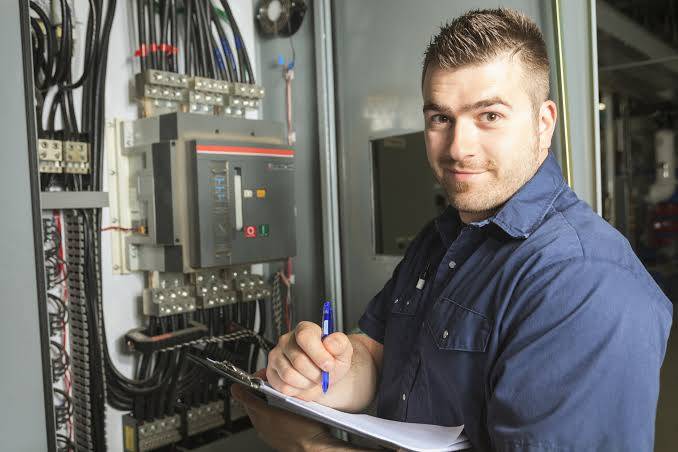
Bolt Electrical electrician diagnosing an electrical fault
No guesswork, just diagnosisWe find the fault and explain what it means.

Common electrical faults in Bath properties

Bath's housing stock spans from Georgian town houses to Victorian villas, Victorian terraces to modern estates. The age and condition of the building often determines what goes wrong and how to find it.

Georgian and Victorian town houses

Old wiring in solid construction

Historic properties around the city centre, Larkhall and Batheaston often have original rubber or fabric insulation, corroded earth connections and no RCD protection. Faults can be hard to trace because the wiring is hidden deep in walls.

How we find it: we use a circuit tracer and insulation tester to locate breaks and faults without unnecessary opening up of historic walls.

Victorian villas and larger homes

Extensions and upgrades layered over decades

Properties in Weston, Newbridge and Combe Down frequently have multiple rewires and DIY extensions. Old circuits become overloaded, connections corrode and faults are tangled across different eras of wiring.

How we find it: we methodically test each circuit, check earthing and bonding, and identify what has failed and why.

Semi-detached and terraced properties

Shared walls and hidden cable routes

In Keynsham, Saltford and the suburbs around Bath, terraced homes have neighbour-facing walls where faults can be shared or hard to access. Damp is common, and water damage can cause intermittent tripping and burning smells.

How we find it: we inspect the board, test for moisture, check for water ingress in cavity walls and trace circuits to their source.

Flat conversions and apartment blocks

Shared supplies and limited access

Converted houses and purpose-built blocks near the city centre often have one meter feeding multiple properties and cable runs in shared voids. A fault in one flat can be hard to isolate from the common supply.

How we find it: we coordinate with the building manager, check the communal board first and test your circuits independently of your neighbours'.

What finding a fault involves

Electrical faults need diagnosis before repair. Here is what we do to pinpoint the problem.

  • Inspect the consumer unit and earthing
  • Test insulation resistance and continuity
  • Trace circuits to identify which one is failing
  • Check for water damage, burnt connections or loose terminals
  • Test RCD devices to confirm they are working
  • Advise on whether repair, replacement or partial rewire is needed
  • Carry out the fix and retest the circuit
  • Issue a certificate for the work done

How we diagnose electrical faults

Most electrical faults fall into a few patterns: overload, water damage, ageing insulation or a faulty appliance. We test methodically to narrow down what has happened.

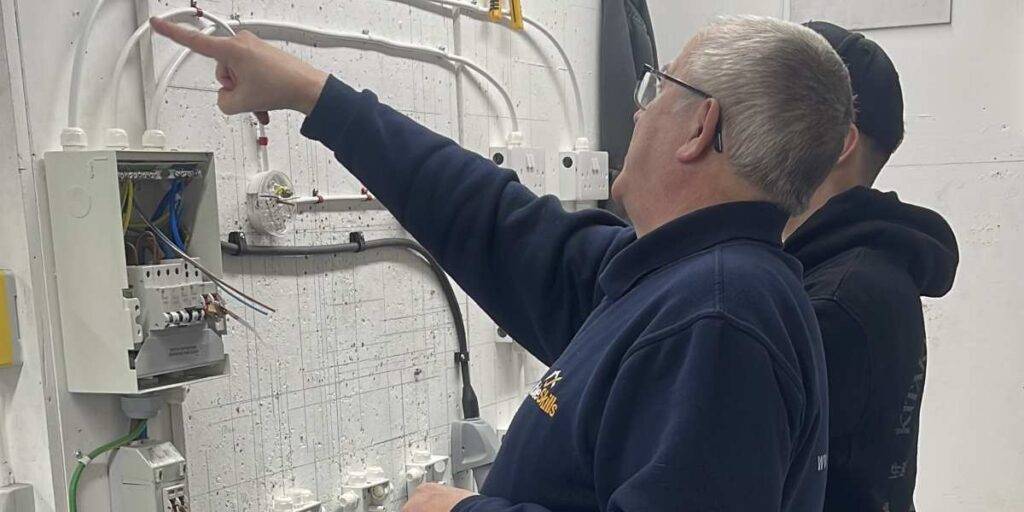
Electrician using diagnostic equipment to test circuits
  1. 01

    Listen and inspect

    You tell us what happened — did the circuit trip, is one socket dead, is there a smell? We visually check the board, wiring and any damaged sockets or switches.

  2. 02

    Test the circuit

    We use an insulation tester to find breaks or leaks to earth. If the whole circuit is dead, we check the board; if only one socket, we test that socket and the cable to it.

  3. 03

    Trace the problem

    Once we know which cable or terminal is faulty, we either repair it on the spot or advise if the circuit needs replacing.

  4. 04

    Fix and verify

    We carry out the repair, retest the circuit, and explain what caused the fault and what to do to prevent it next time.

What affects the cost of fault finding in Bath

A simple fault — a loose connection or a tripped RCD — may cost only the callout. A hidden fault or one that requires cable replacement will be higher. Here is what moves the price.

Ask for a quote
  • What you can tell us

    If you know the fault is in one room or one circuit, it speeds up diagnosis. If the whole house is affected, it takes longer to narrow down.

  • How old the wiring is

    Victorian properties with original rubber insulation take longer to test safely. Modern wiring is quicker to diagnose.

  • Whether the fault is obvious or hidden

    A burnt-out socket or visibly damaged cable is quick to spot. A short inside a wall or in a buried cable run needs careful testing and may mean opening up to locate it.

  • Whether repair or replacement is needed

    Some faults are a loose terminal or a blown RCD — a quick fix. Others mean replacing a cable run or a whole circuit board section.

  • Time of day and callout type

    Standard working hours are quicker to arrange. Emergency callouts outside 9am–5pm, Monday to Friday, are chargeable at a higher rate.

Warning signs of electrical faults

These are the most common warnings that something is wrong. If you notice any of them, call an electrician.

Circuit breaker trips

Intermittent or constant tripping

An RCD that keeps tripping suggests water is getting into the circuit or an appliance is leaking. A regular MCB that trips means overload or a short. Either way, do not keep resetting it; find the cause first.

Burning smell or scorch marks

Near sockets, switches or the board

Burnt or melted plastic, discoloured outlet plates or a smell of burning insulation mean heat buildup. Turn off that socket or circuit and call us. Do not use it again until it is tested.

Dead sockets or lights

One socket or one room affected

A single dead outlet usually means the circuit has tripped or a cable is broken. If a whole room is out, check the board first; if that is not it, the cable run is damaged.

Tingles or electric shocks

When touching a socket, switch or appliance

This is a fault to earth. It means the earth connection has failed or an appliance is leaking. Never ignore it; ring us immediately.

Flickering lights

When an appliance turns on

If lights flicker when the cooker, heater or washing machine starts, the cable is undersized or the connection is loose. It is not dangerous, but it needs fixing to prevent overheating.

Old, warm or buzzing electrics

Board is hot, terminals are warm, buzzing from the board

Overloaded circuits, loose connections and failing components all heat up. This is a fire risk and needs urgent diagnosis.

Areas we cover in and around Bath

We respond to fault-finding calls across Bath and the surrounding towns, including:

  • City Centre
  • Larkhall
  • Batheaston
  • Weston
  • Newbridge
  • Combe Down
  • Keynsham
  • Saltford
  • Southstoke
  • Peasedown St John

Other electrical services in Bath

Questions Bath customers ask about fault finding

How quickly can you come out for a fault-finding callout in Bath?

We aim to visit within 24 hours during working hours (Mon–Fri 9am–5pm). If the fault is urgent — a burning smell, water near the board, or constant tripping — we offer a 24/7 emergency callout service. Ring 07123456789 and we will advise you on the priority.

Will you need to open up walls or lift floorboards to find the fault?

Not always. We test circuits using diagnostic equipment first to narrow down where the problem is. If the fault is in a hidden cable run, we may need to open up to locate and repair it. We will tell you if that is necessary before we do it, and advise what making good will cost.

What if the fault is in an old rubber-insulated cable?

Rubber insulation from pre-1970s wiring often fails. If the fault is in that cable, we can either repair a small section or recommend a partial rewire of that circuit. For historic properties where preservation matters, we can discuss options that minimise damage to plasterwork and original finishes.

Can you fix the fault the same day, or will I need a return visit?

Many faults — loose connections, tripped RCDs, blown fuses, burnt sockets — we can fix on the spot. Others, like a short in a hidden cable or a failed circuit board component, may need a return visit if we have to order a part. We will tell you on the day which it is.

Do you issue a certificate for fault-finding work?

Yes. For any repair or modification we carry out, we issue a certificate of the work done. If you are only paying for diagnosis and advice (not a repair), we can provide a written report instead.

Why is my RCD tripping but I can't find anything wrong?

An RCD trips when it detects a fault to earth — usually water entering the circuit, a damaged cable, or an appliance leaking. The fault may be intermittent, so it doesn't always trip. We test each circuit on your board and any appliances plugged in to find where the leakage is happening.

Electrical fault in your Bath home?

Ring us now for a same-day diagnosis or book an emergency callout.

07123456789